Best Diffuser Oil Scents for Home Ambiance
Match the scent to your room's purpose, not just your preference.

The best diffuser oil depends on the room, not on which bottle you happen to love. Once that clicks, shopping changes; you stop hunting for a favorite smell and start asking what a specific room needs from the air inside it.
Most people buy diffuser oil the way they buy toothpaste. Whatever's familiar, whatever worked last time, same bottle forever. Toothpaste doesn't care about context, but scent does, and the lavender blend that's perfect in your bedroom at 10pm turns into a weird, sleepy fog in your kitchen at noon. Nobody needs convincing that smell affects mood; that part's obvious to anyone who's ever walked into a bakery and felt their shoulders drop. What's missing is the room logic underneath it, the gap between "I like this" and "this is doing the job this room needs done."
Here's the mechanical part, and it's worth sitting with for a second. Smell connects almost directly into the limbic system, the brain's emotional switchboard, without stopping for analytical processing first. Sight and sound both route through the thalamus before you consciously register them. Smell skips that layer entirely, which is part of why a candle can shift a room's mood faster than a lamp ever could, and why a whiff of something can drag up a memory before you've figured out what you're even smelling. I still can't walk past a certain sunscreen smell without thinking about a pool I haven't seen in twenty years.
That routing is also why "functional fragrance" turned into an actual category instead of a marketing throwaway line. Scents built around sleep, focus, stress, or energy have been growing for a few years running now. People are increasingly buying outcomes, the same way they'd buy a supplement or a white noise machine.
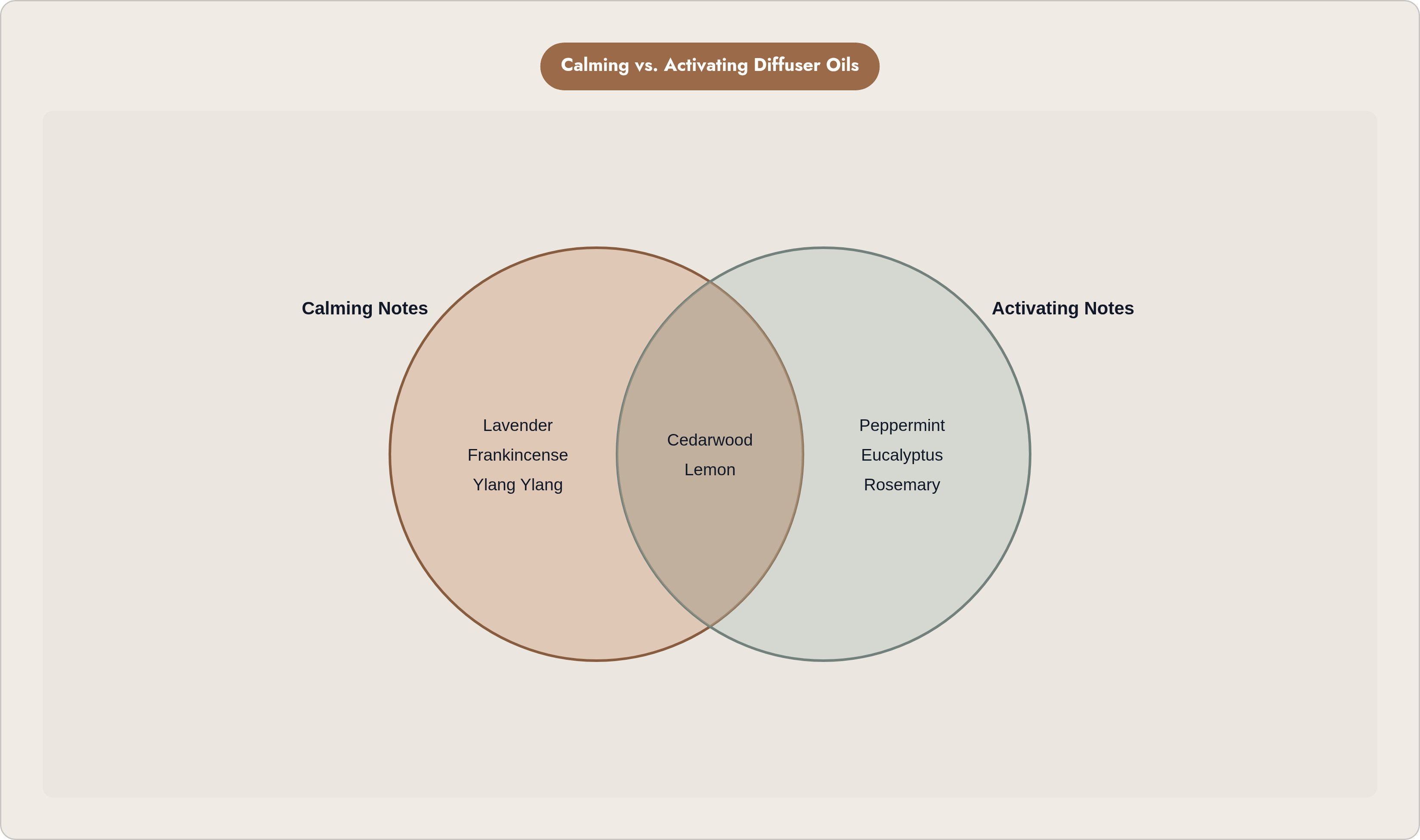
Two families do most of the work here. Calming notes, think lavender, cedarwood, frankincense, ylang ylang, chamomile, slow the nervous system down and quiet the mental static. Activating notes, citrus, peppermint, eucalyptus, rosemary, sharpen alertness and create that sensation of thinner, cleaner air. Mix them up and you end up wide awake at midnight wondering why the "relaxing" blend you bought smells like a gym bag.
Intensity is a separate variable from which family you pick, and it trips people up constantly. More oil in the air doesn't mean more mood; past a certain point it just means a headache and an open window at 2am. Delivery method matters too, more than most people expect standing in a store aisle squinting at bottles. Cold air diffusion breaks the oil into a dry micro-mist without heat or water, keeping the aromatic compounds intact. Heat or dilution warps that same scent and can flatten the functional benefit almost entirely. This is worth knowing before you assume every diffuser on a shelf does the same thing, because they genuinely don't.
Bedroom scents that help the room do its actual job
A bedroom has one job: get you from awake to asleep and keep you there. A scent that fights that transition, or competes for attention against it, isn't doing its job no matter how nice it smells at 6pm when you're getting ready for bed with three hours to spare.
Lavender earns its reputation honestly. It's the most studied sleep-support scent out there, mild enough that almost nobody reacts badly to it, flexible enough to sit underneath almost anything else layered on top. Ylang ylang adds floral weight without making the room feel heavy, and pairs cleanly with either lavender or cedarwood. Cedarwood brings something resinous and grounded, the kind of note that anchors lighter florals so they don't float off into nothing. Frankincense rounds things out: woodsy, quiet, good for the ten minutes before lights-out when you're stretching or just staring at the ceiling deciding whether today counted as a win.
A blend of lavender, ylang ylang, and cedarwood works because it layers top, middle, and base notes, so the scent shifts slightly across the evening instead of going flat after fifteen minutes. Run it lower than you would elsewhere in the house; you want ambient presence, not a wall of fragrance greeting you at the door. Timing helps too. Thirty to forty-five minutes before bed, then off while you sleep, gives the room time to settle into it without wasting oil running all night for nobody in particular.
Placement matters more than people assume. Nightstand height or a dresser across the room both work fine, but never directly over the bed, since that puts concentrated mist right at face level while you're asleep and can't do anything about it. The activating family generally belongs elsewhere. Citrus and peppermint suit waking up more than winding down, and a bedroom that smells like a workout works against the room's entire purpose.
Living room scents that work across the different ways the space gets used
The living room shifts identity throughout the day, so a single scent rarely covers all of it. Coffee spot at 8am, makeshift desk at 1pm, gathering place by 8pm; the fragrance that nails one of those moments is often wrong for the other two.
The fix is zoning by time of day instead of picking one fixed scent and hoping it stretches. Mornings and social hours want citrus and light florals, lemon, bergamot, sweet orange, because they feel open and fresh without dominating a conversation. Evenings want warm woods and soft spice, cedarwood, sandalwood, a touch of vanilla or amber, shifting the room's register toward comfort as the day runs out of steam.
Florals deserve their own mention, since they're consistently one of the biggest categories in home fragrance overall. Living rooms are exactly where broad-appeal florals like rose, peony, and magnolia earn their spot, because this is the room strangers actually sit in, and crowd-pleasing beats interesting when there's company over. Cedarwood does double duty across both zones, blending easily with morning citrus and evening spice alike, which makes it one of the more efficient single bottles to own before you've built out a full rotation.
Room size isn't an aesthetic detail here. It's physics, plain and simple. Living rooms tend to be the biggest room in the house, and a diffuser without enough throw just disappears into all that air. Cold air diffusers cover noticeably more square footage than reed diffusers or candles, and that gap is the difference between a scent you notice and one you paid for and never smelled, especially in open floor plans where the living room bleeds straight into the kitchen.
One more thing, if you actually host people: lean clean and familiar when guests are coming. Unusual or heavy scents pull focus away from conversation, and building atmosphere beats making a statement in a room where the point is other people, not the diffuser sitting quietly in the corner. Gourmand notes, vanilla, caramel, warm baked-good smells, spike in popularity through the colder months, and land strangely well in living and dining spaces once the weather turns cold enough to want a blanket on the couch.
Kitchen scents that neutralize without overpowering cooking smells
Kitchens carry a smell problem no other room deals with quite the same way. Yesterday's fish, this morning's coffee, tonight's garlic, all stacked on top of each other. A sweet or heavy fragrance piles on top of that instead of covering it up, and now you've got two smells fighting instead of one.
Sharp citrus and clean herbal notes cut through rather than layering on, and lemon specifically is the single most effective note for slicing through cooking odors. It reads as clean, closer to fresh air than to perfume, which is exactly the distinction a kitchen needs. Sweet orange works as a softer stand-in when lemon feels too aggressive. Eucalyptus brings a clarifying edge that earns its keep especially in kitchens doubling as laundry or utility space, and tea tree adds a faintly medicinal cleanliness when blended in small amounts with citrus.
The living room's favorites tend to work against a kitchen's needs. Gourmand notes stack sweetness on top of cooking smells and muddy the air instead of clearing it. Heavy florals cause the same collision from a different angle. Both suit other rooms far better than this one.
Placement is practical, not decorative. Keep the diffuser away from the stovetop and steam, since heat and moisture mess with cold air diffusion and can wear the device down faster than it should. A counter across the room from the cooking zone tends to be the sweet spot. Run it at moderate intensity while cooking; the goal is balancing the air, not overpowering whatever's in the pan. There's a seasonal swap worth knowing too: lemon and mint carry spring and summer, while a warmer citrus-herb blend, orange and rosemary, fits better once it's cold enough outside to want soup for dinner.
Home office and study scents that support concentration without creating fatigue
The home office job is narrower than it looks. Sustaining attention through a long stretch of work matters more than raw energy, and there's a real difference between a scent that sharpens focus and one that just adds distraction to a room that already has plenty of it, most of it arriving through your inbox.
Peppermint is the most studied activating scent for this exact purpose, sharpening alertness and easing mental fatigue through long sessions at the keyboard. Rosemary gets tied to cognitive clarity and pairs well with citrus, which takes the edge off before rosemary tips into harsh territory. Eucalyptus opens up the breathing, useful if your office is a small, closed-off room without much airflow, which, statistically, it probably is. Lemon or bergamot give a gentler lift for afternoon hours, when what you need is a nudge, not a jolt.
Here's the part that's easy to miss: activating scents running nonstop tend to fade into background and quietly stop doing anything at all. Intermittent diffusion, thirty minutes on, thirty minutes off, beats constant diffusion for focus. This is where a programmable diffuser earns its price tag, letting you match scent cycles to your work blocks instead of running the thing all day and wondering why it went quiet by 2pm.
Heavy florals and warm woods, so useful two rooms over, sit in the wrong register here. They slow a room down, and slow is the last thing you want three hours before a deadline. If you're buying just one blend for the office, rosemary and lemon together is the low-risk pick, stimulating without tipping harsh, steady enough to hold up across a full workday.
Bathroom and entryway scents where first impressions and cleanliness converge
These two rooms don't share a wall, but they share a job description. The entryway is what your home smells like before a guest has seen a single other room in it. The bathroom is where cleanliness gets communicated by scent nearly as much as by anything you can actually see with your eyes.
Eucalyptus is the clearest signal of clean available, and it works in both spaces, though it's especially at home in bathrooms, echoing the spa-and-gym association most people already carry around without thinking about it. Peppermint registers immediately, crisp enough that it makes sense in an entryway, where you want the scent to land the second someone crosses the threshold. Lemon or grapefruit brighten a small space with a light touch rather than a heavy one. Green, biophilic notes, rain, fig leaf, wet stone, moss, have been picking up real momentum in new home fragrance launches, and suit bathrooms particularly well, reinforcing a sense of natural air rather than a masked one.
Small spaces come with a real catch: bathrooms and entryways tend to be the smallest rooms in the house, which means they hit scent saturation fast. Overpowering fragrance in a small room does more harm than good. Keep intensity low in both. For the entryway specifically, remember this scent sets expectations for the whole house before anyone's even taken their shoes off. A clean, welcoming profile, light citrus or a soft herbal, does more work here than anything unusual, even if the unusual bottle makes better dinner-party conversation later on.
Bathroom placement is simple enough: keep the diffuser away from shower steam, using a shelf or ledge outside the direct moisture zone to protect the device and the oil both.
What to look for in a diffuser oil before the scent even matters
What's actually in the bottle? That's the question worth asking before the scent question, and it's the one most people skip walking down the aisle. Read a handful of ingredient labels side by side sometime. The gap between what they imply and what they actually disclose is bigger than it should be, and it's a little maddening once you notice it.
Labeling terms like "natural fragrance," "aroma," "parfum," and "fragrance oil" can all describe synthetic formulations underneath. Unless a product says 100% essential oil explicitly, the real composition is often genuinely unclear, and that's just how labeling rules work in this industry right now. The burden lands on the buyer to look closer than the front label wants you to.
A few things are worth checking. Full ingredient disclosure is the floor; a brand publishing its complete list is telling you something just by doing it. Third-party certifications like EWG Verified or Made Safe signal formulation transparency, while Leaping Bunny certification signals cruelty-free sourcing. Phthalate-free formulation matters too. Phthalates are plasticizing chemicals that still turn up in some synthetic fragrance blends, and there's no version of "breathing that in daily for months" that sounds appealing once you say it out loud. Vegan and cruelty-free labeling matters to a growing share of buyers, and doubles as a decent proxy for a brand paying attention to formulation overall.
Diffuser compatibility is its own separate headache. Not every oil is built for cold air diffusion; thick or alcohol-heavy oils can clog atomizers or warp the scent profile in ways you didn't sign up for when you bought the thing. Waterless oils made specifically for cold air diffusion hold up more consistently over time.
There's a safety thread running under all of this too. A lot of diffuser buyers choose diffusers over candles mainly for safety reasons, and clean formulation is part of that same decision. If pets share the house, this matters even more directly. Certain eucalyptus concentrations and high doses of tea tree can irritate animals in poorly ventilated rooms, and it's an easy thing to overlook until an animal in the house starts reacting to it. Brands that disclose formulations and test for safety give households with kids and pets an actual baseline to work from instead of a guess.
How to build a home scent collection that works across all your rooms
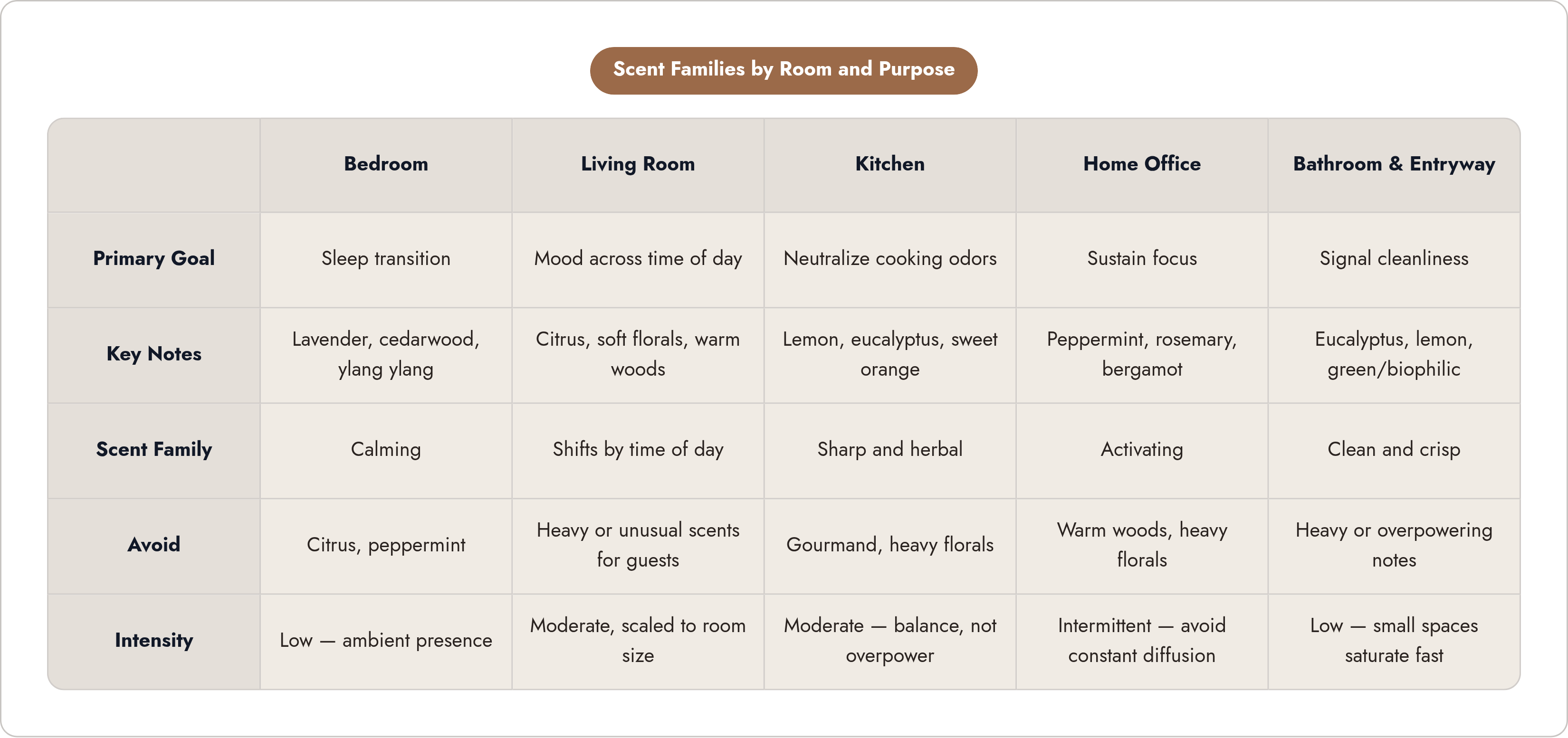
The "scent wardrobe," different fragrances for different rooms, moods, and hours of the day, used to be a habit only fragrance obsessives bothered with. It's mainstream now, and that shift toward several purposeful scents lines up with everything covered above. A bedroom and a kitchen need opposite things from a diffuser, so one bottle was never going to cover both, no matter how good it smelled in the store when you bought it on a whim.
You don't need eight oils on day one to start doing this right. Pick one calming anchor, lavender, cedarwood, or a soft floral, for the bedroom and any quiet corners of the living room. Add one activating oil, peppermint or rosemary, for the office and anywhere you need a mental nudge instead of a wind-down. Round it out with one neutralizing citrus, lemon most likely, for the kitchen, and one clean, crowd-pleasing profile, something eucalyptus-adjacent or green and biophilic, for the entryway and bathroom.
Whether that ends up being four bottles or six is beside the point. What matters is that each one has a job description before it earns a place on the shelf. Match the tool to the task, keep the intensity honest, and pay attention to what each room's actually asking for.